How to use
Good practices
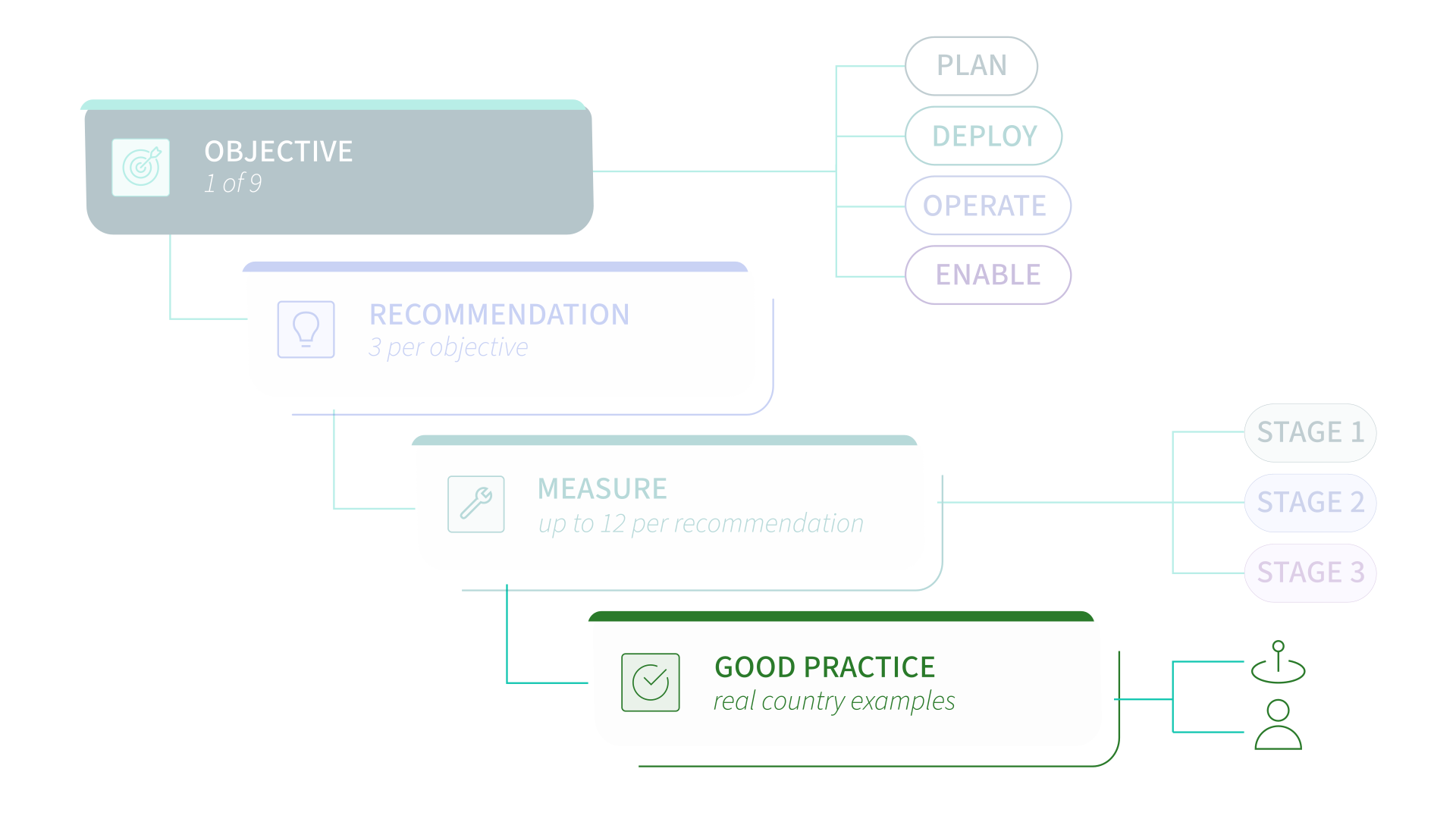
Good practices are real-world examples of how a measure in the toolkit has been put into practice. Each one is linked to the measure it illustrates, and describes how a country, region, regulator or grid company implemented it. Together they document grid modernisation progress around the world, and how measures have been adapted to different circumstances.
What you will find
The good practices come from power systems around the world, at different stages of grid modernisation and organised in different ways, from vertically integrated utilities to systems with separate companies for generation, transmission, distribution and retail. Some describe a single regulatory decision or programme; others describe a reform that unfolded over several years. Where more than one good practice is linked to a measure, comparing them shows the range of ways in which it can be designed.
How to use them
Good practices are most useful once you have identified a measure you want to take forward. They can help in several ways:
- Design. They show the choices others made in designing a measure, such as its scope, the institutions involved and how costs were allocated.
- Sequencing. They show what was put in place first and what followed, which can inform your own roadmap.
- Making the case. Evidence that a measure has worked elsewhere can support discussions with colleagues, stakeholders and decision-makers.
- Learning from peers. They point to institutions that have already implemented a measure and may be able to share their experience.
Few examples will transfer directly to another system. Market structure, institutional roles, the state of the grid and the wider policy framework all shape how a measure works in practice. Read each good practice with your own context in mind, and use the implementation considerations on the relevant recommendation page to think through how it might apply.
A growing collection
The collection of good practices is a living resource, and we will continue to add to it. Not every measure has a good practice linked to it yet. If you know of an example that would help others, we warmly invite you to share it: the article How to help us improve the toolkit explains how.
Continue reading
Continue through the guide with the next article.