How to use
How the toolkit is organised
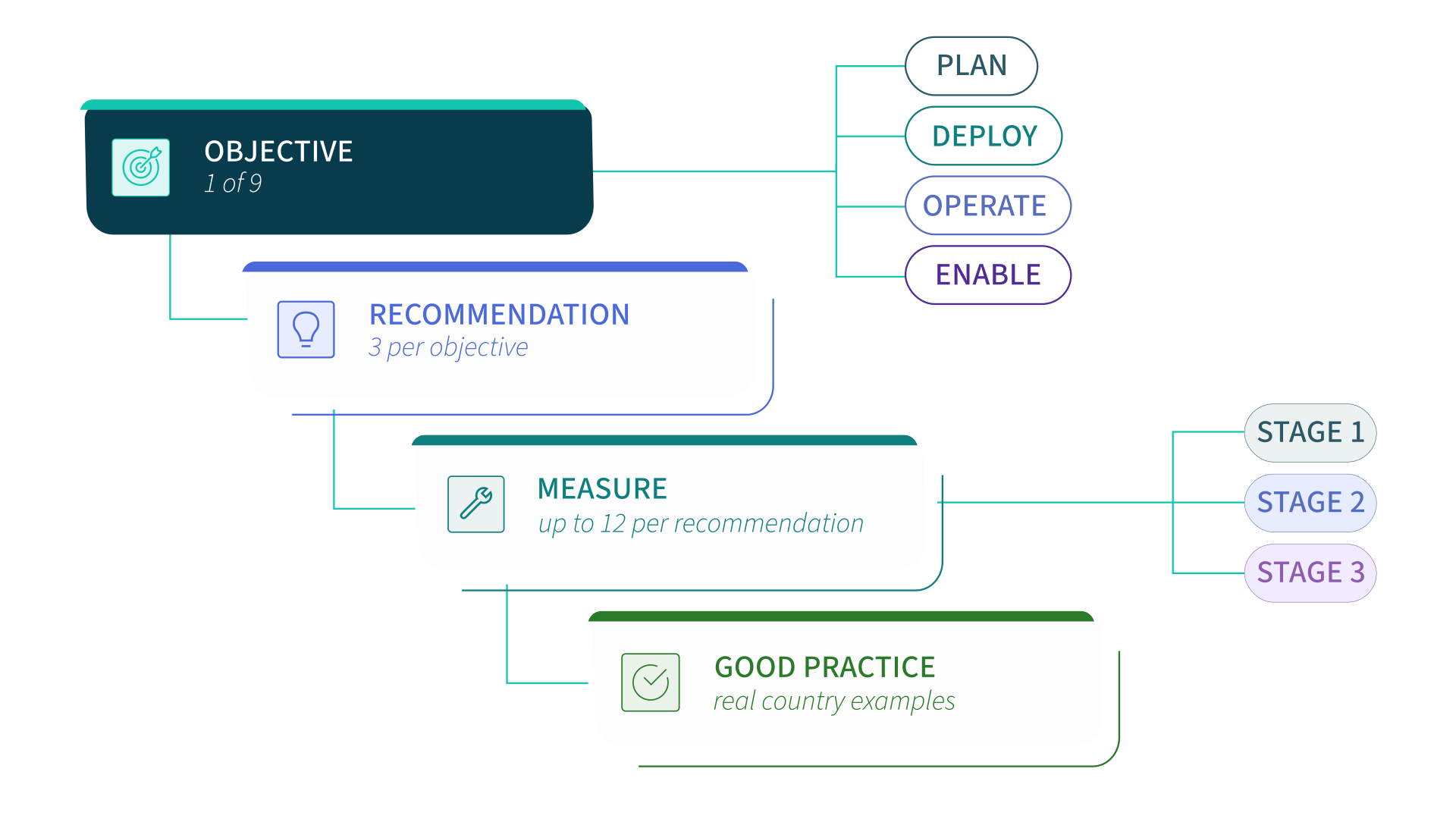
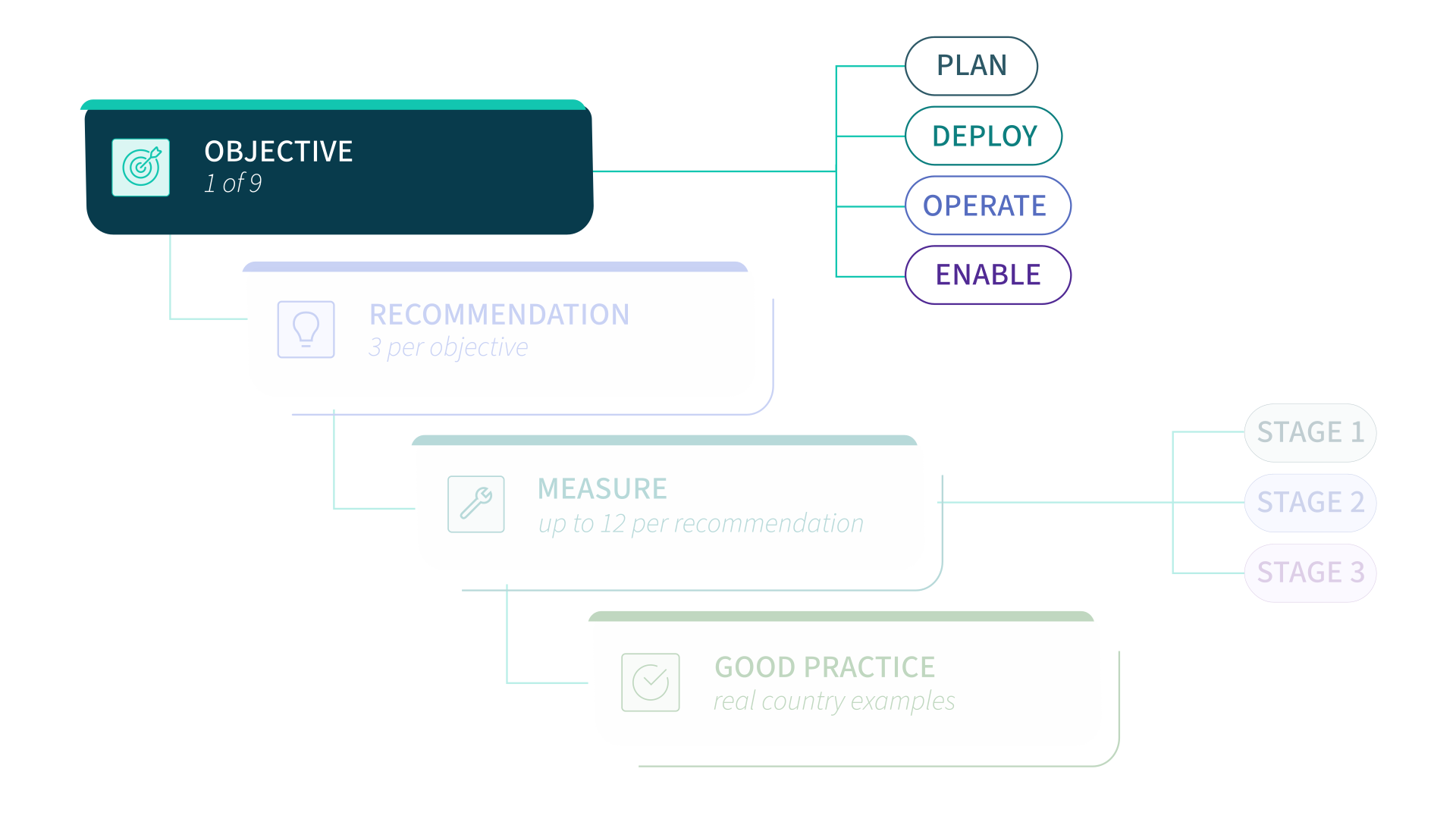
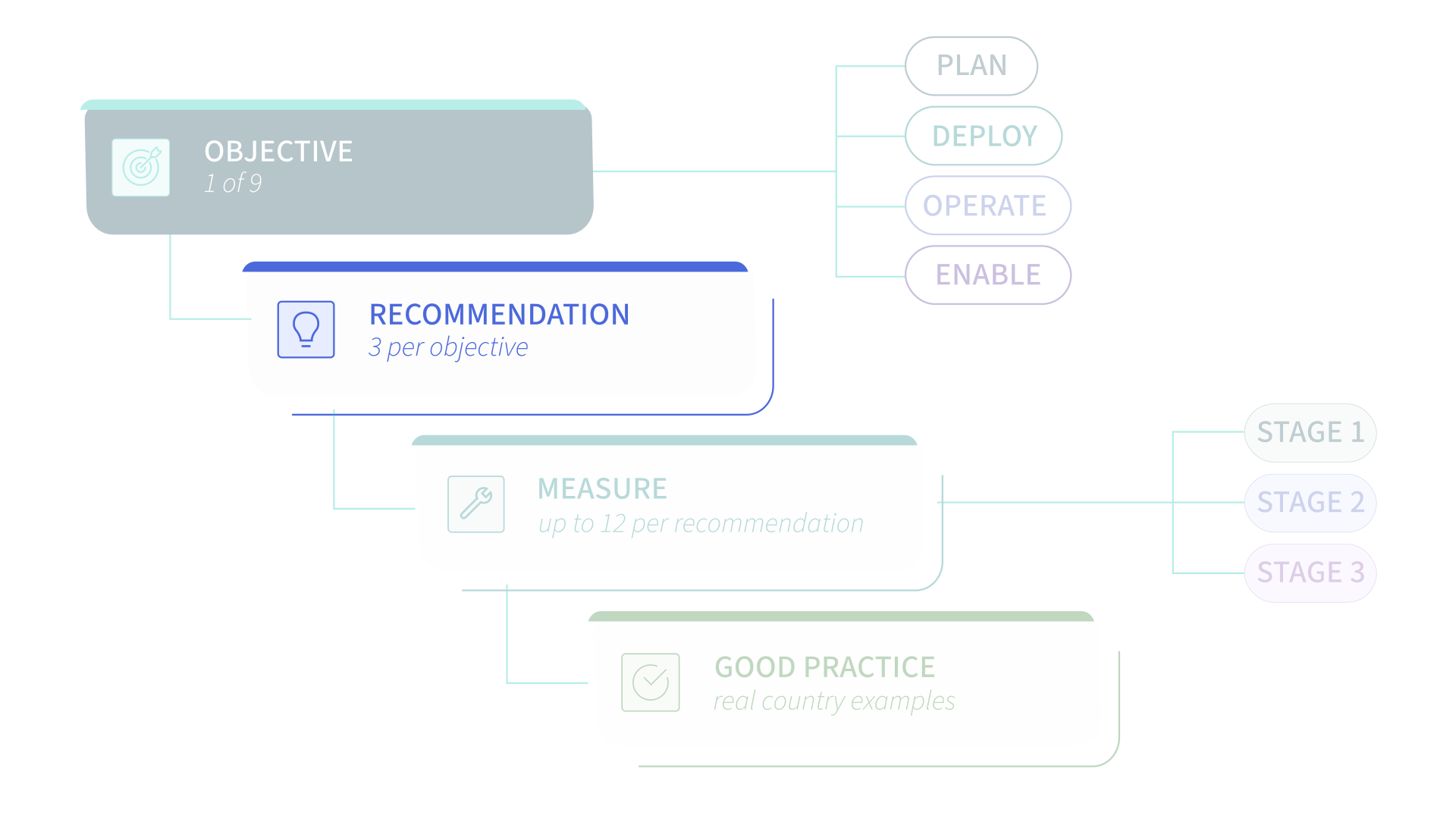
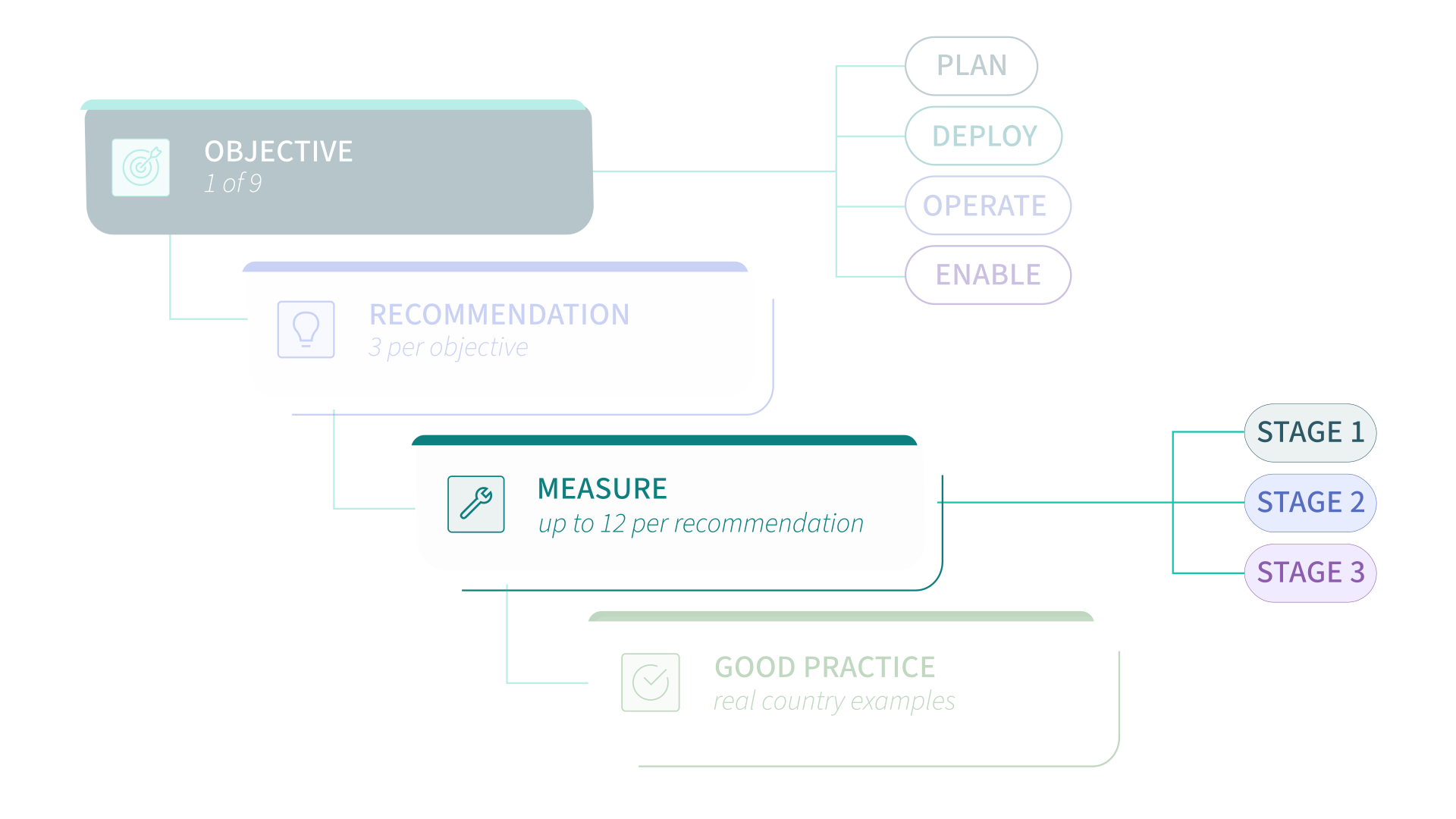
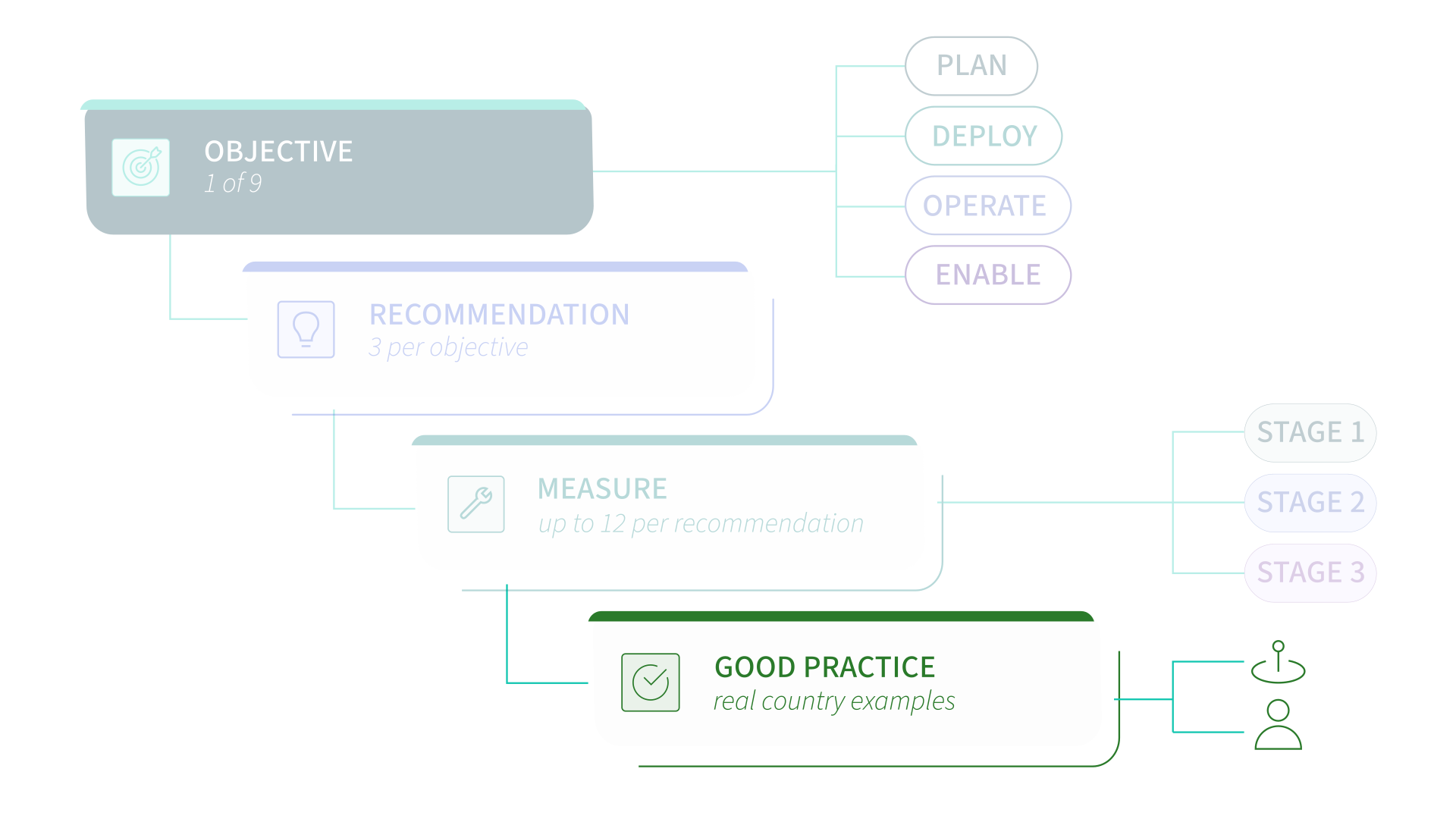
The toolkit is organised in four levels, each more specific than the one above it: domains, objectives, recommendations and measures. Good practices are linked to the measures. You can start at any level and move up for context or down for detail.
Domains
The four domains group the policy agenda by the part of the grid’s development and use it concerns. Plan covers how future grid needs are anticipated and how grid planning connects to wider energy planning. Deploy covers how grid infrastructure is built and how new supply, storage and demand connect to it. Operate covers how grids are run and how flexibility across the energy system is put to use. Enable covers the governance, capabilities and public support that the other three domains depend on.
Objectives
Each domain contains two or three objectives, nine in total. An objective states a policy goal, such as reforming grid planning or unlocking flexibility. Each objective page explains why the objective matters, what it calls for and how it connects to the other objectives. It also summarises what is at stake for security, competitiveness and affordability, the three benefits used throughout the toolkit.
Recommendations
Each objective is broken down into three recommendations, 27 in total. A recommendation calls for action in a specific area of reform, such as streamlining permitting or broadening participation in flexibility. Each recommendation page explains why the recommendation matters and how to act on it, stage by stage. It also sets out what to keep in mind during implementation, including the interests of different stakeholders and questions of equity, and suggests further reading.
Measures
Measures are the concrete policy and regulatory actions through which recommendations are put into practice. An example is requiring the publication of long-term grid project and investment pipelines. This supports the implementation of the recommendations related to the development of grid equipment supply chains, grid companies’ access to finance and the functioning of anticipatory investment regimes.
Each measure is assigned to one recommendation, its core recommendation. However, many measures, such as the example above, support more than one recommendation. The other recommendations a measure supports are its related recommendations. Each recommendation page therefore first lists its core measures, and then its related measures from elsewhere in the toolkit that contribute to it.
Each measure is also assigned to one of the three stages of grid modernisation, which indicates when it typically becomes a priority. The next article, the three stages, explains what each stage involves.
Good practices
Good practices provide real-world examples of how a measure has been implemented. The article good practices explains how to use them. This is a growing collection that future work will add to. Users of the toolkit are also warmly invited to submit good practices for consideration.
Finding your way
You can read the toolkit from the top down, starting with a domain and working towards the measures and their good practice examples. You can also start from a measure or good practice that interests you and move up to see the recommendation and objective it serves. The articles in the put it to work section of this guide discuss further how to select measures for your own situation.

Continue reading
Continue through the guide with the next article.