How to Use
The three stages
What the grid needs to be able to do depends on the power system around it. Grids in most countries were designed for a small number of large power plants, power flowing in one direction and predictable demand. Three developments are changing this. Solar and wind generate a growing share of electricity. Industry, transport and buildings are electrifying, raising demand and changing its shape. And a growing share of supply, storage and flexible demand comes from distributed energy resources: smaller, more numerous and often owned by households and businesses, connected to the distribution grid.
The toolkit describes this progression in three stages of grid modernisation. Each stage sets out typical system conditions and the policy priorities that go with them. No single metric marks the move from one stage to the next: a stage reflects the combined state of renewables, electrification and distributed energy resources.
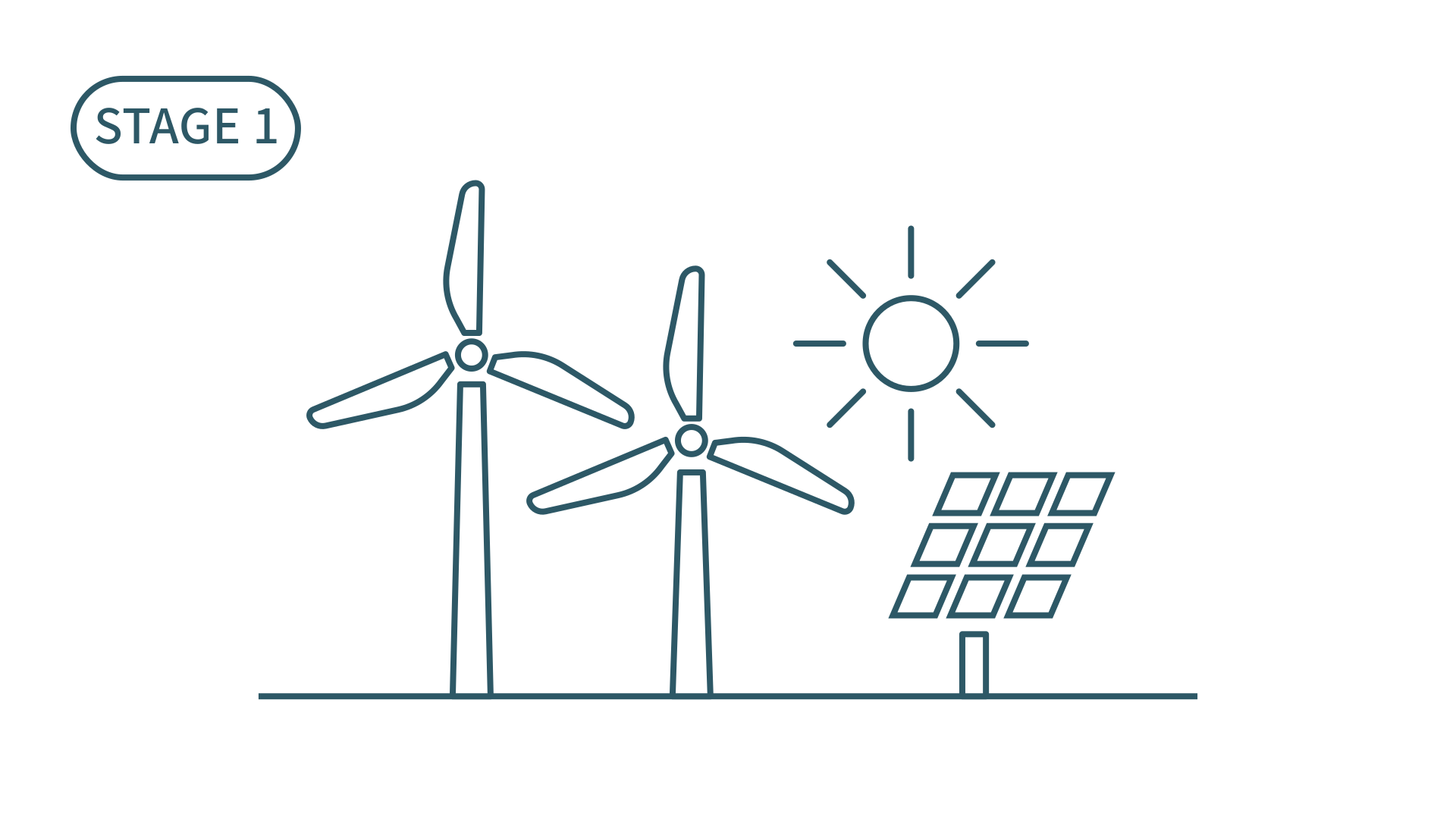
Stage 1: Foundation
The power system still operates broadly within its traditional design. Renewables, distributed energy resources and electrification are visible, but their impacts can be managed with straightforward measures, such as basic time-of-use tariffs and technical standards for rooftop solar. This stage gives policymakers time to lay the foundations for what follows: updating planning methods, grid codes and connection rules before deployment accelerates, increasing grid visibility, making sure new devices are ready for smart operation, and setting out the legal basis for new actors such as aggregators.
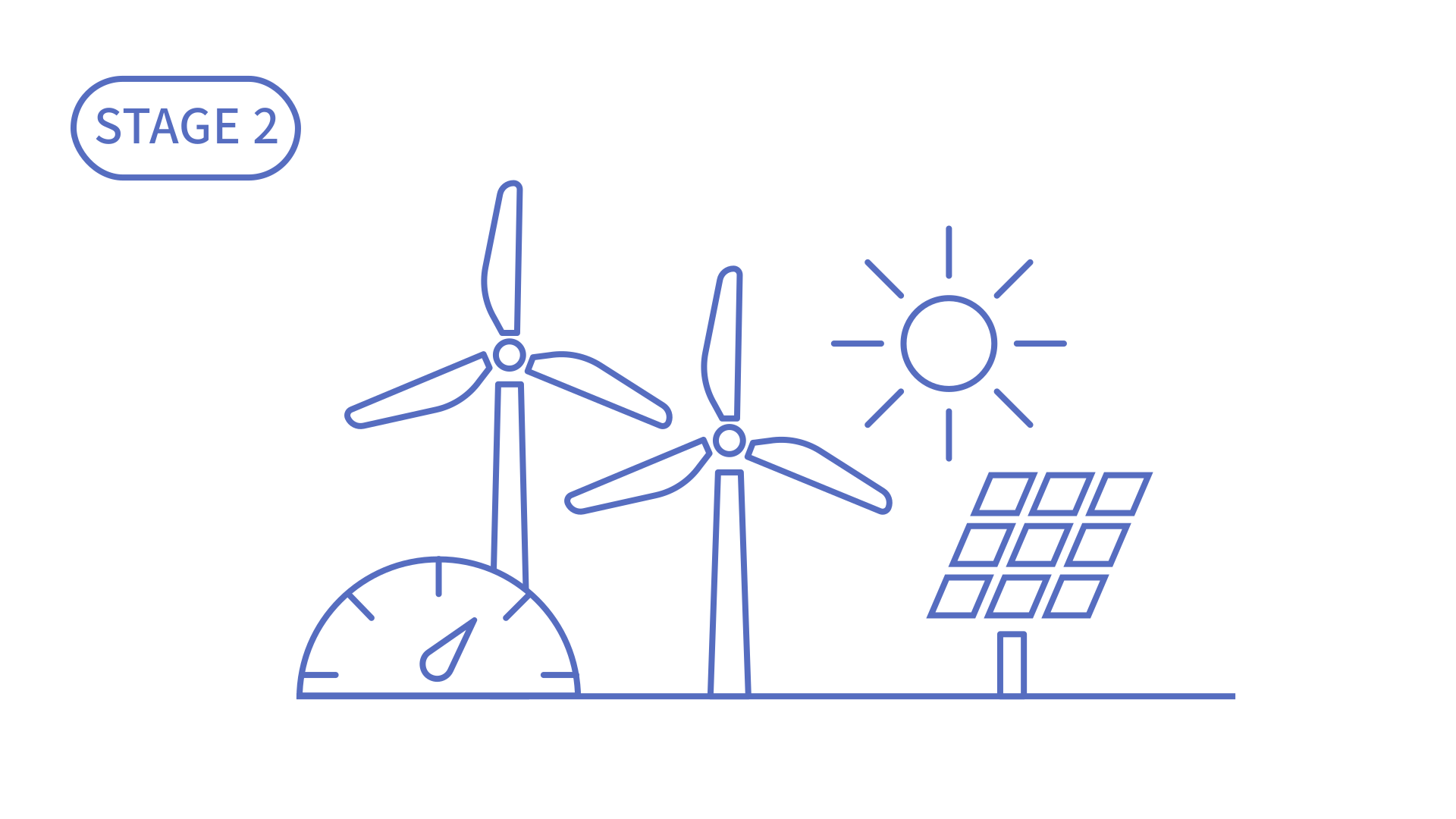
Stage 2: Acceleration
Renewables now shape how the power system is run, causing steeper ramps and more frequent periods of low net demand, while electrification adds to peak demand. Operating the system flexibly becomes the central task. System operators use better forecasting and a wider pool of flexible resources, including storage and large consumers. As conventional plants run less, system services such as frequency and voltage control are defined, quantified and procured, and grid codes require renewable generators to provide the services they are technically capable of. Grid operators raise the utilisation of existing infrastructure. Distributed resources begin to take part through structured flexibility programmes, which build the experience needed for stage 3. Planning in this stage shapes the grid that stage 3 will depend on: transmission and distribution planning are integrated, capacity is built ahead of need where the case is well evidenced, and alternatives to reinforcement are assessed first. Regulation moves towards performance-based models that reward grid companies for outcomes such as faster connections.
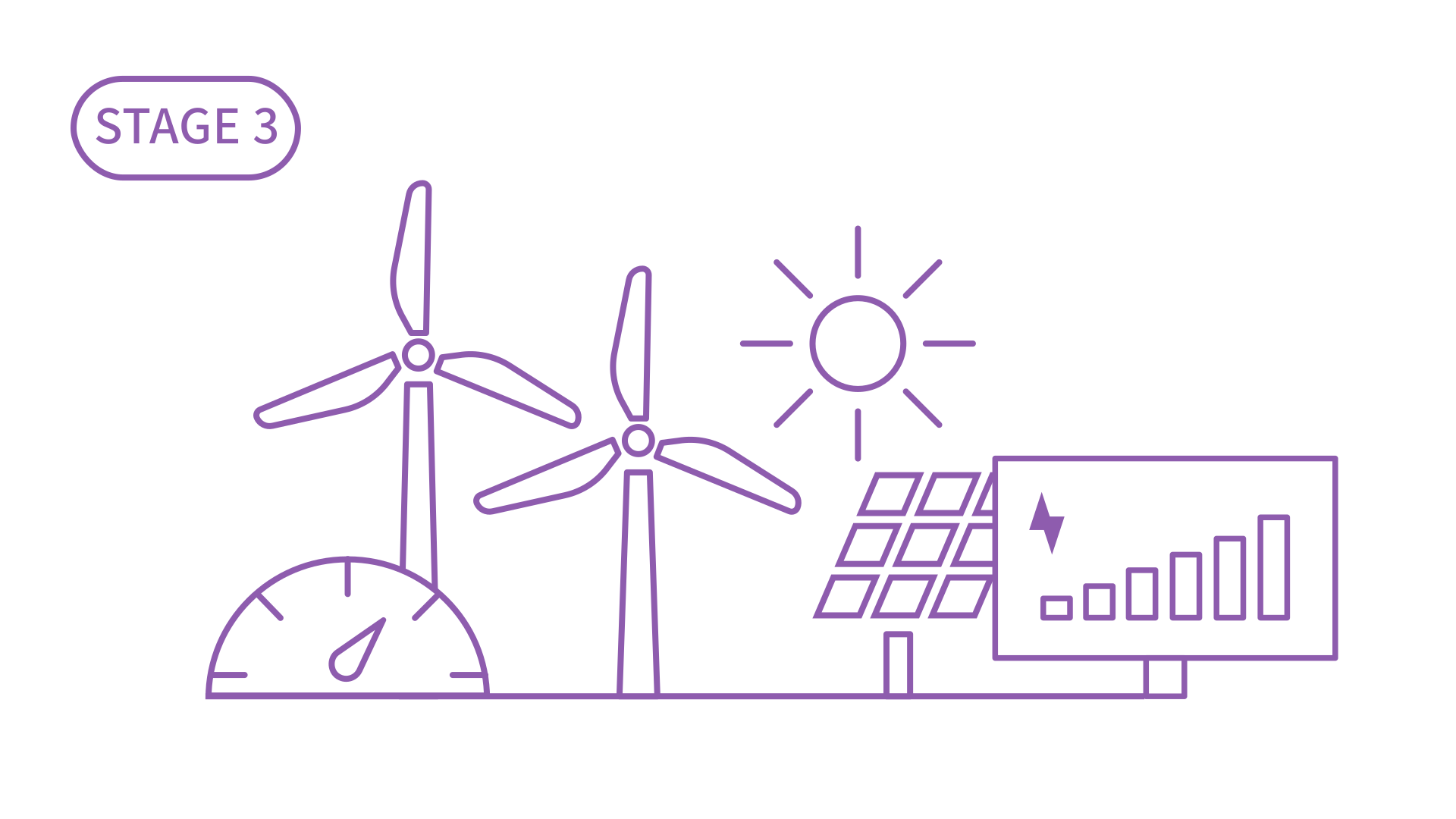
Stage 3: Transformation
The power system becomes more distributed. Much of the flexibility the system needs now sits with millions of devices and grid users, such as electric vehicles, heat pumps, batteries, rooftop solar and flexible industrial loads, most of them connected to the distribution grid. Activating and coordinating this flexibility in real time becomes the central task. This requires extensive digitalisation and automation, from largely automated connection processes to grid operation. Distribution grid companies operate as active system operators, coordinating closely with transmission system operators and aggregators. Regulation supports this role by treating spending on flexibility services and digital systems on an equal footing with investment in physical assets. With the grid dominated by inverter-based resources, maintaining stability requires new strategies, such as the use of grid-forming inverters.
How the stages relate to each other
The stages build on one another. Measures from an earlier stage remain necessary in later ones, and many later-stage measures depend on foundations laid earlier. The stages describe typical conditions, so the boundaries between them are gradual. The article finding your starting point explains how to work out where your power system stands.

Sources
The three stages draw on established frameworks: the IEA’s six phases of variable renewable integration and its phases of electric vehicle grid integration, the US Department of Energy’s roadmap for integrating distributed energy resources, and the electrification staircase.
- IEA (2022), Grid Integration of Electric VehiclesOpens in new tab, International Energy Agency, Paris.
- IEA (2024), Integrating Solar and Wind: Global Experience and Emerging ChallengesOpens in new tab, International Energy Agency, Paris.
- Madeddu, S., Drake, W., Butler, T., Hiel, A. and Liebreich, M. (2025), The Electrification StaircaseOpens in new tab, Electrification Alliance, Brussels.
- US Department of Energy (2024), DOE Distributed Energy Resource Interconnection RoadmapOpens in new tab, Interconnection Innovation e-Xchange (i2X), Washington, DC.
Continue reading
Continue through the guide with the next article.